
Is AI making your productivity worse? We investigate the facts…
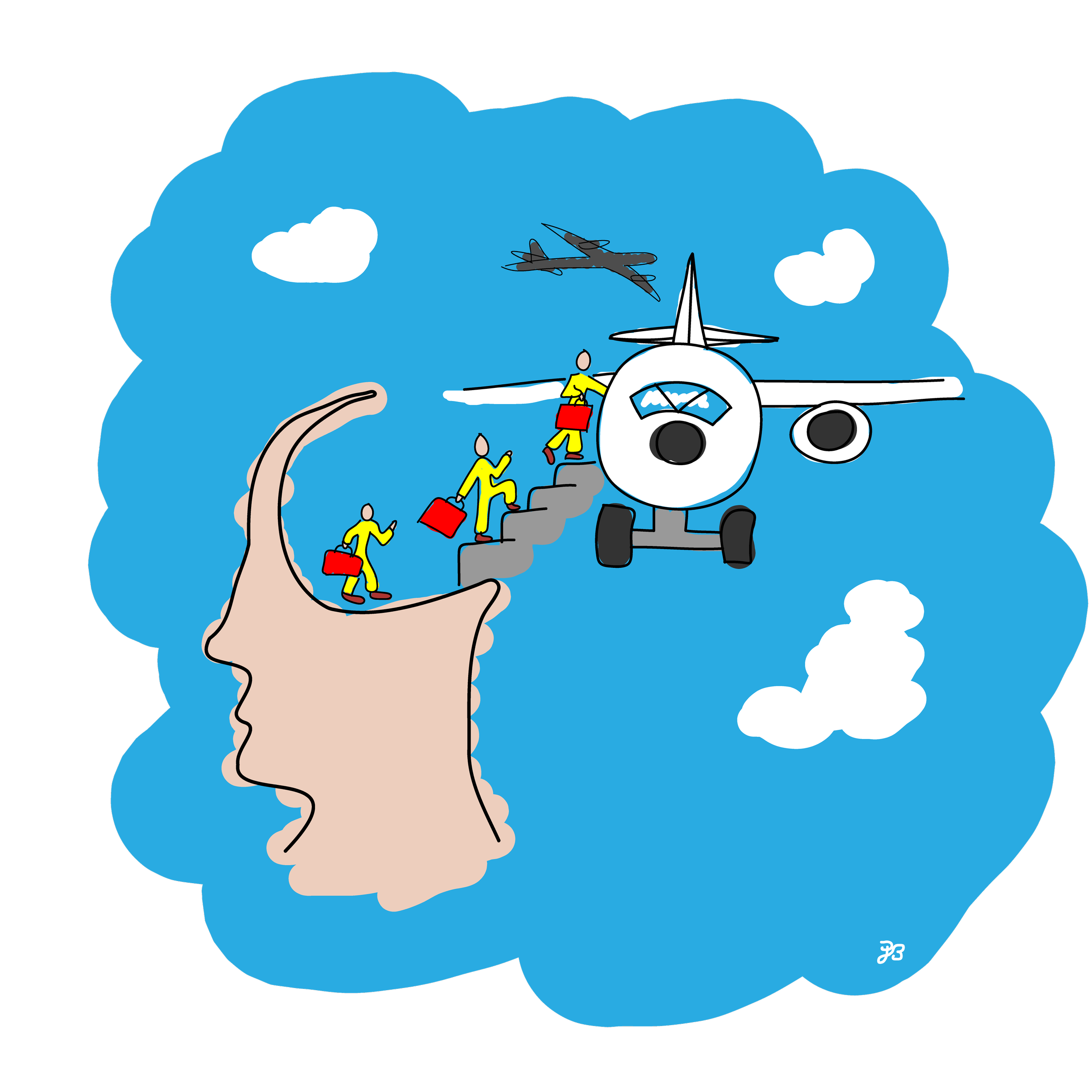
Much has been said recently about the dangers of AI, and for most people the biggest fears seem to involve AI going rogue and taking over the world, or environmental catastrophe from the colossal amounts of energy and water being swallowed by datacentres. However, here at Thinking Space, we’ve uncovered research that shows that, as a society, we may have already sleepwalked into the middle of a much more silent threat.
The rate at which experienced health professionals detected precancerous growths in the colon decreased by 20% in a study of over 1,400 colonoscopies
In October 2025, an unassuming paper was published in the Lancet, the leading scientific journal for medicine, with the title, “Endoscopist deskilling risk after exposure to artificial intelligence in colonoscopy: a multicentre, observational study”. In the paper, Budzyń et al. looked at four endoscopy centres in Poland which were taking part in an AI trial for cancer detection. Worryingly, they found that the adenoma detection rate (ADR) dropped by 20% (from 28.4% to 22.4%) after the endoscopists in the study returned to being unassisted by AI (compared with before the AI was introduced), suggesting that something was happening to their behaviour. Marcin Romańczyk, co-author of the study, postulated; “Imagine that you want to travel anywhere, and you're unable to use Google Maps. We call it the Google Maps effect. We try to get somewhere, and it’s impossible to use a regular map. It works very similarly.”
Shortly afterwards, Time Magazine picked up the story and spoke to experts including Catherine Menon, principal lecturer at the University of Hertfordshire’s Department of Computer Science, who commented, “Although de-skilling resulting from AI use has been raised as a theoretical risk in previous studies, this study is the first to present real-world data that might potentially indicate de-skilling arising from the use of AI in diagnostic colonoscopies.”
Indeed, since late 2025 the mound of evidence for this problem has continued to grow. Only this March, a review of several of the studies that have come out since was published in ESMO Real World Data and Digital Oncology. In it, they found that erroneous AI prompts increased false-positive recalls by up to 12% in a controlled study of breast-imaging radiologists, and in another study, over 30% of pathologists reversed an initial diagnosis that was correct when exposed to incorrect AI suggestions under time constraints. This echoes an earlier study that found that the accuracy of mammogram readings by inexperienced radiologists fell from 80% to 20% after being exposed to incorrect AI suggestions, and even experienced radiologists — with more than 15 years under their belt — weren’t immune, seeing their accuracy drop from 82% to 46%.
Over 30% of pathologists incorrectly reversed a correct initial diagnosis when exposed to an incorrect AI suggestion.
Our ability to think and carry out tasks is enabled by the connections between the neural pathways in our brains. Indeed, as we improve our skills or learn new things, we see a growth in the number of connections. Every time we practise an action or thought, a signal is fired down that same pathway again. However, our brains are efficient organs and have a use-it-or-lose-it strategy to maintaining these pathways, meaning that the more of our thinking that we depend on AI to do, the more likely that our brains are to prune those pathways, making us worse at the tasks that we once excelled at. This can lead to a decrease in productivity over time.
It is becoming evident that we may have found ourselves in the middle of a crisis. With AI usage at an all-time high, being used everywhere from everyday communication to public messaging, from personal decision making to corporate strategy, and more besides: it is clear how far-reaching the risk is here. Of course, these impacts may be outweighed by improvements in the ability and accuracy of AI systems that ultimately compensate for this loss, however it is still important to be aware of these risks.
Whether or not you decide to use AI yourself, we believe that it is important to be aware of the risks from dependency. There is a growing pile of evidence in the medical field for the phenomenon of deskilling, which presents a clear risk for productivity reaching far across different areas of the economy. More personally, you should be aware of the pruning effects on your neural pathways which happens if you become dependent on a particular shortcut. So, it’s worth asking yourself: is this a skill I can afford to lose?