
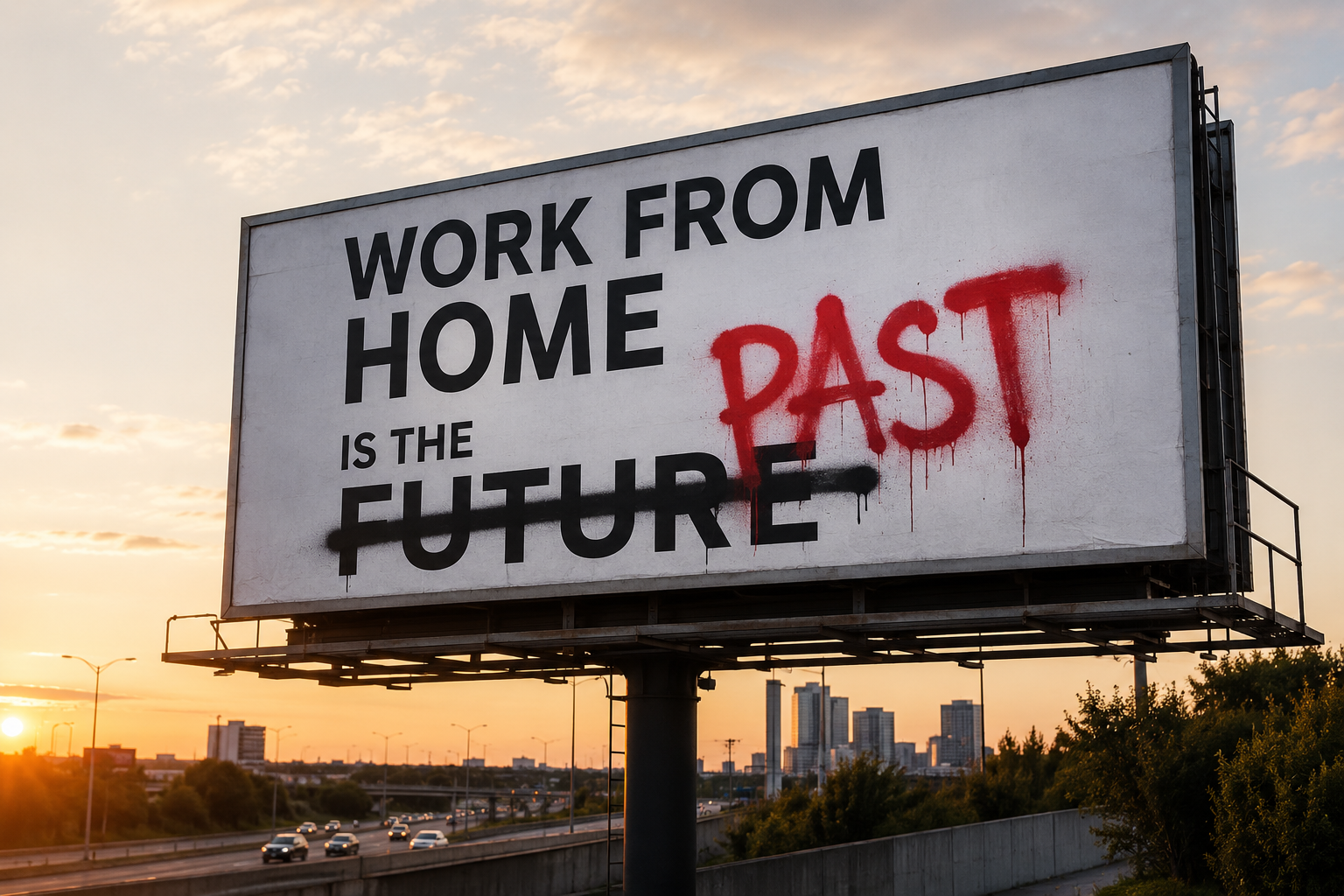
Is this the end for Work from Home?
For a while public figures such as Elon Musk and Jamie Dimon, CEO of JP Morgan, have called for a return to the office. Now major companies are planning and even implementing this return.
One of the early movers was WPP which attracted significant backlash in January 2025 when it sent out an email stating that “the expectation across WPP will be that most of us spend an average of four days a week in the office”. Other key players such as Goldman Sachs and AT&T have also followed suit.
Even public institutions have found this debate at their doorstep. Recently the Met Police have faced strikes over reducing the flexible working of it’s civilian staff, while there have been debates in the Senedd and Stormont about the use of offices by the Welsh and Northern Irish Governments.
On 9th January, there was a shift in the BBC’s coverage of remote work from positive to negative. Headlines such as “Could we be seeing the end of working from home?” started to dominate the feed.
“The office is the powerhouse of the company”
Work from Home (WfH) has also come into the spotlight as the debate around the crisis in junior jobs has spread. Both the FT and Business Insider have recently published pieces pinning the crisis in entry level hires on WfH rather than A.I..
The office is the powerhouse of the company. It’s a centre for sharing intel, discussing and collaborating. It’s a place with an intention.
There’s a little-known equation about this, which goes like this:
Intention of time + place => productivity
So, given that, what do you think the offices of the future should be like? How can they boost productivity?